 KRONOS TRADINGKRONOS TRADING
We immediately escalated the incident to Trustpilot’s compliance team, who are currently auditing and purging the fraudulent entries. In the meantime, their automated system has placed a temporary hold banner on the page.
 SIPC PROTECTED
 FDIC INSURED CASH
 LINKEDIN VERIFIED
 JP MORGAN DALLAS
 HSBC
✓DOMAIN EST. 2021
HSBC
✓DOMAIN EST. 2021
 LIVE ON TRADINGVIEW
PNL, drawdown, signal history, and trade-by-trade performance. The Kronos Signal app tracks it in real time, on your phone, from the day you're licensed. Other providers will hand you a performance report at best and ask you to keep track of your performance directly from within your broker. Giving you access to your own Kronos app solves that completely.
KRONOS
Why does this matter? Because if the algo company you trust with your money disappears tomorrow, your trading signals go dark with them. We solve that problem by routing everything through the biggest charting platform in the world: TradingView. You can continue to generate your own signals even if we get acquired or shut down.
On top of that, you can backtest the system yourself through extreme stress periods, like the 2008 financial crisis or the 2020 Covid crash, to see how the system actually held up. No other company lets you do that.
Six investors, burned for a combined $2.3M, asked 47 algo vendors to share live broker data. 26 refused. We didn't. No affiliate relationship between Kronos and the study. We scored 80/100, and are ranked at the top of the leaderboard, with the one perfect score being the thing we care about most: transparency.
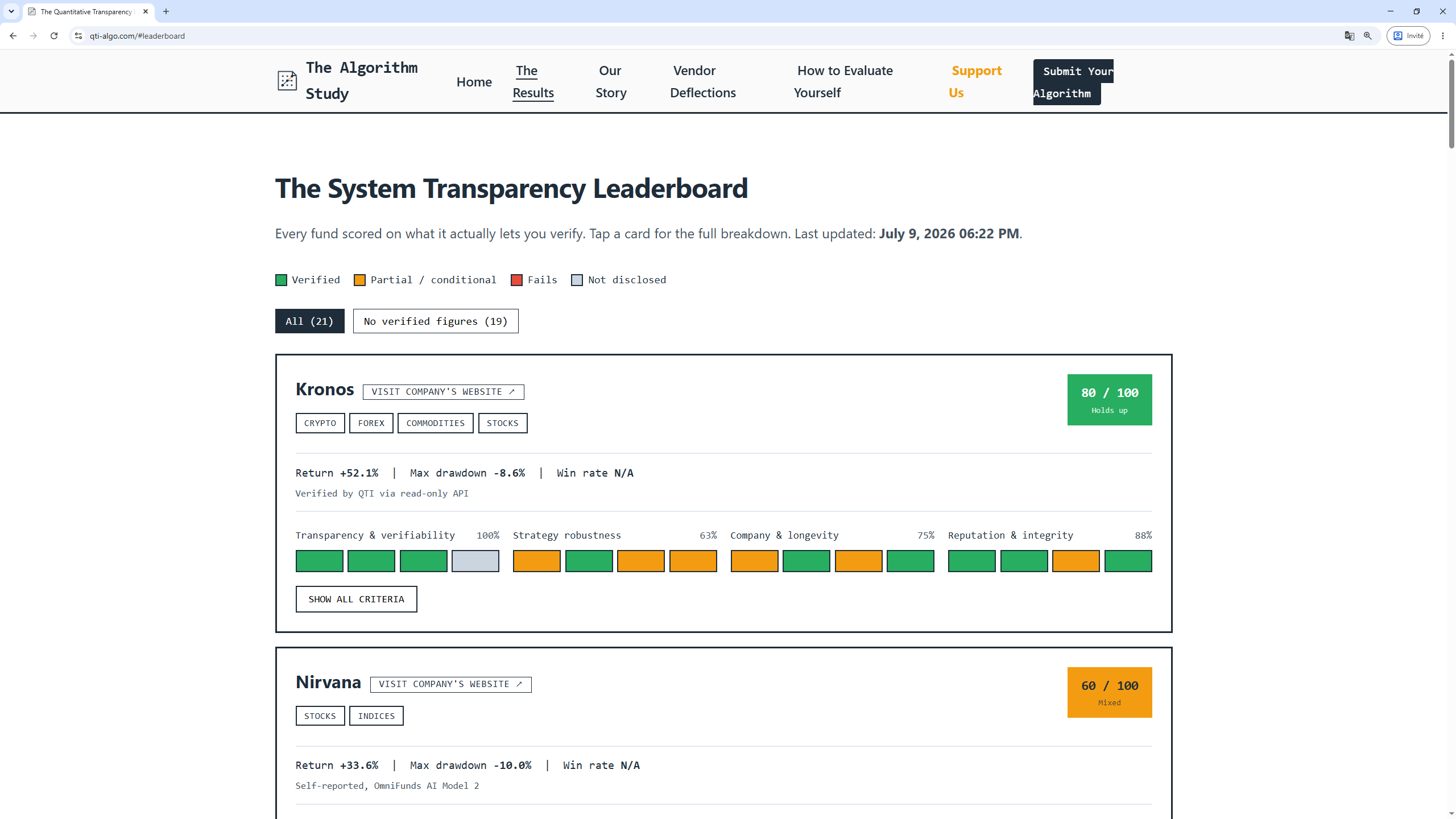
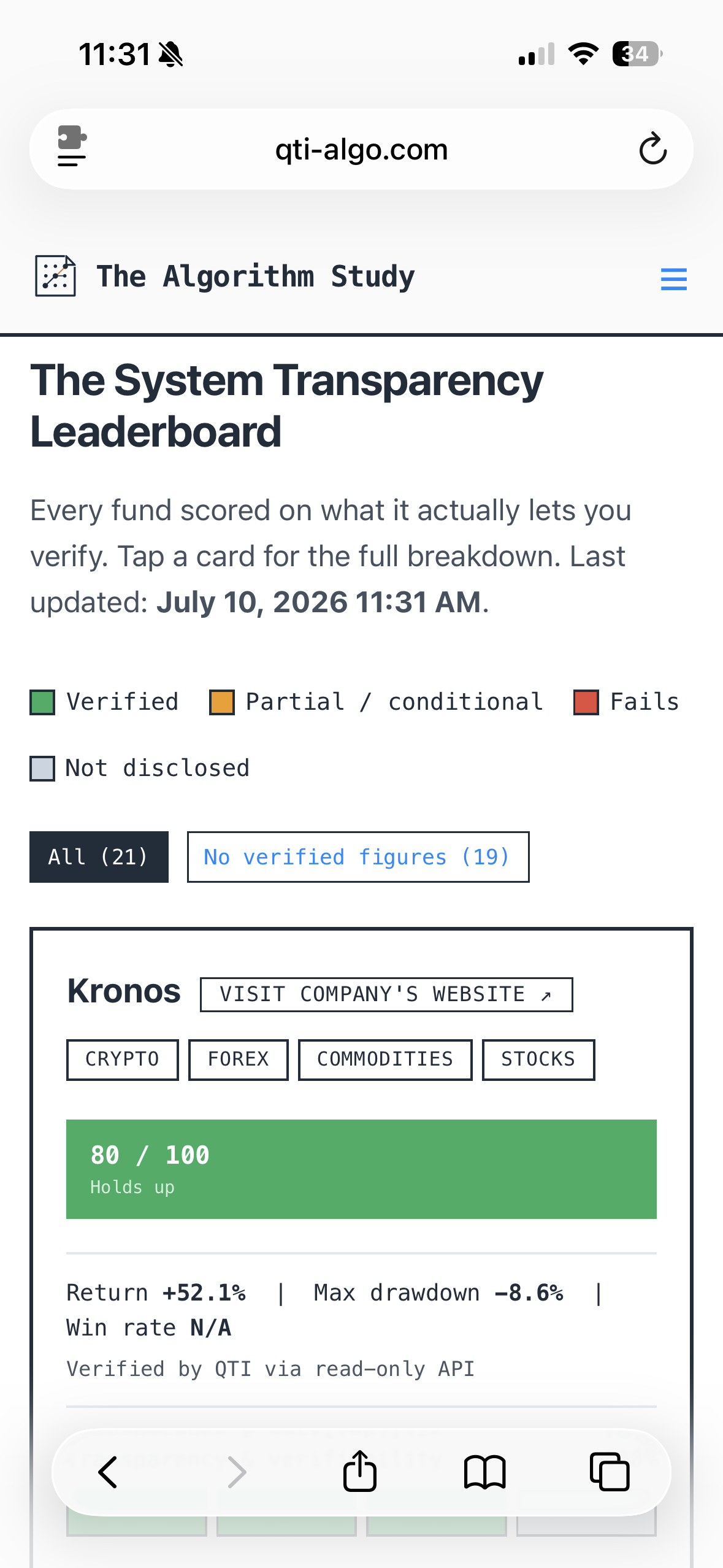
Transparency & verifiability: 100%. Live broker data shared on request, no exceptions.
Strategy robustness: 63%. [Fill in with study's stated reasoning for this score]
Company & longevity: 75%. [Fill in with study's stated reasoning]
Reputation & integrity: 88%. [Fill in with study's stated reasoning]
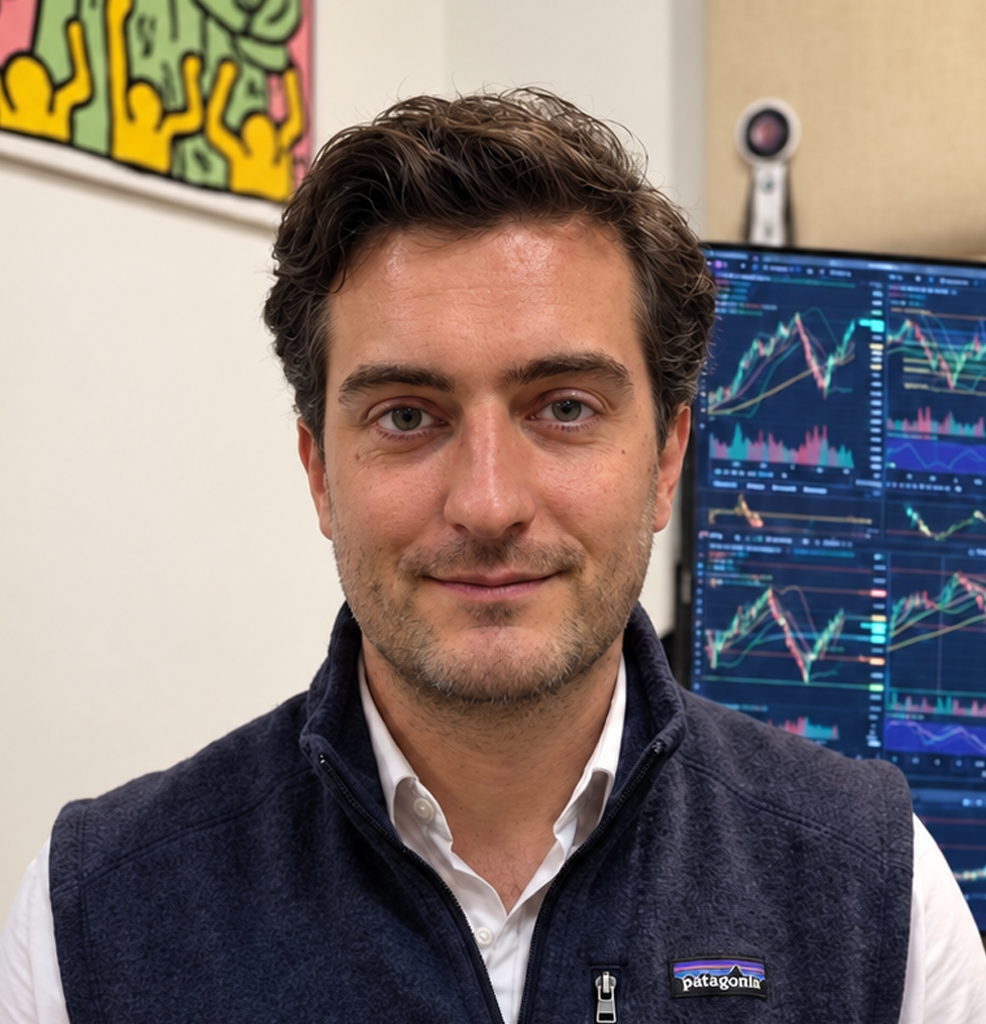
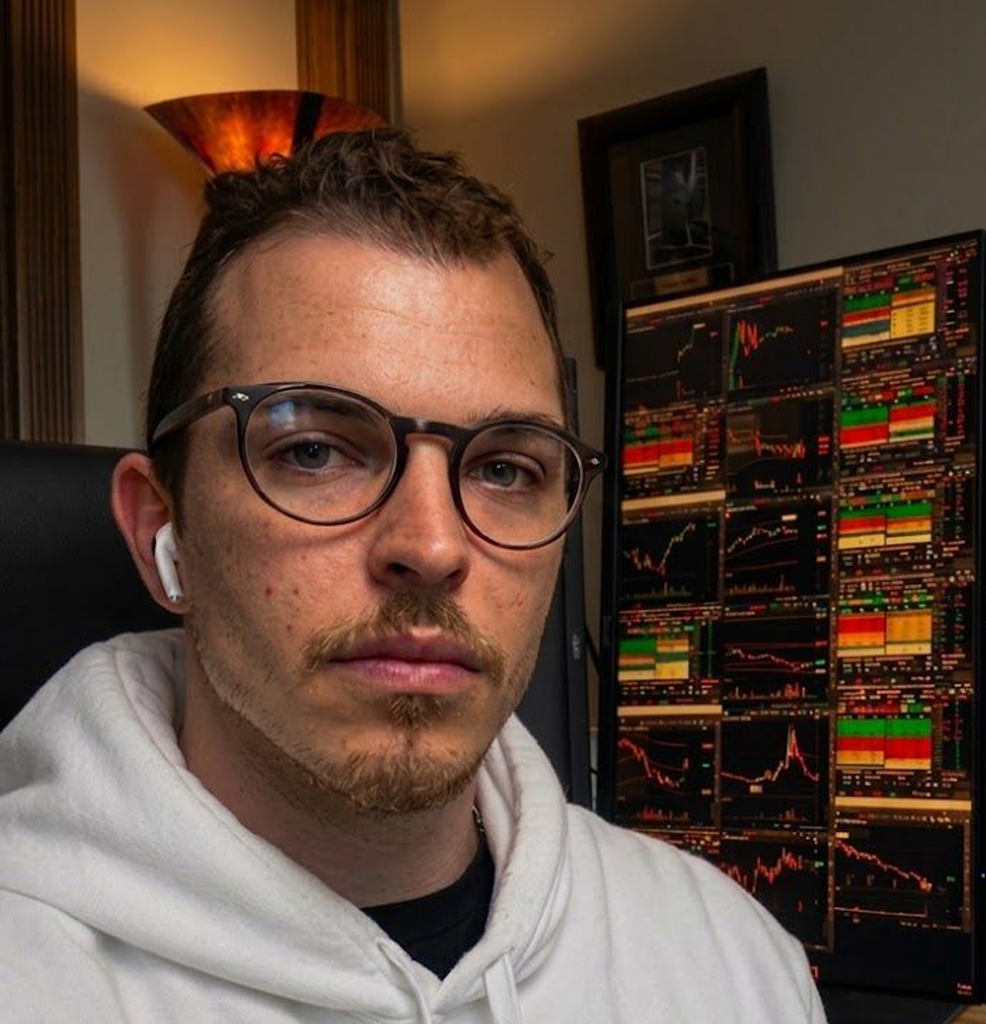
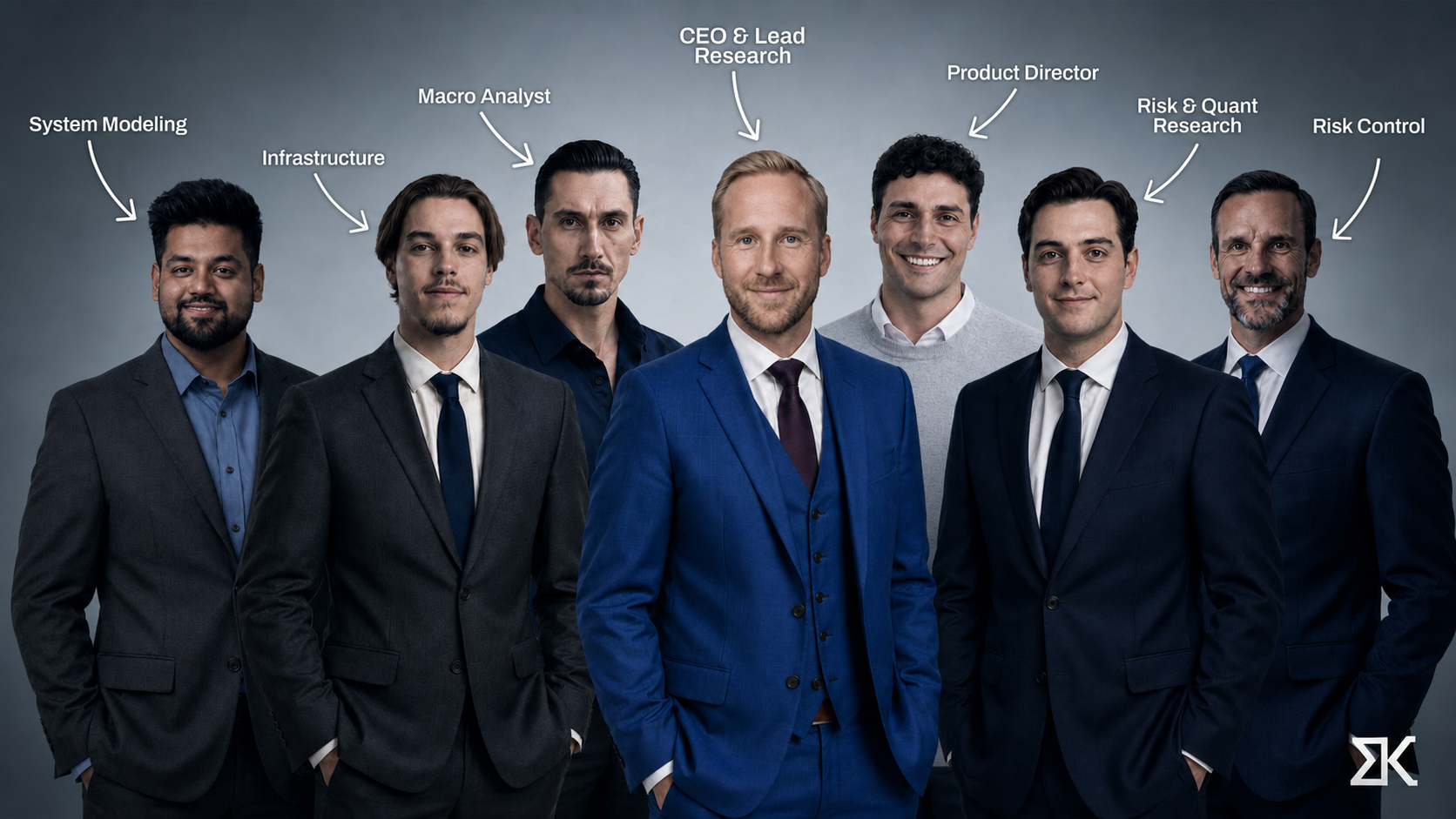
Alex, founder and CEO, built quantitative trading infrastructure for a $50B portfolio at JP Morgan. The engineering team around him designed execution systems for Tier-1 banks like HSBC or BNP Paribas.
Most signal vendors are just a solo developer with a curve-fitted backtest. We are a full quantitative desk.
With Kronos, you get the exact risk discipline institutional capital demands: hard position limits, dynamic drawdown controls, and stress-tested algorithms before a single dollar is deployed.
Every rule in our model survived an institutional review process (Monte Carlo randomization, Walk-Forward Optimization, etc.), not a trial-and-error live account.
Most retail algorithms rely on trend following. They perform well in steady bull runs, but get decimated when markets chop, range, or crash, giving back months of gains in days.
Kronos is built on statistical mean reversion. Instead of chasing late trends, our model profits by catching price overextensions and trading the snap-back.
Because price-to-average imbalances exist across every liquid asset, this exact edge extracts consistent return in US stocks, crypto, and forex alike, through bull, bear, and sideways markets.
Proven live across US stocks, crypto, and forex since 2021.
1-on-1 interviews between our clients and Alex, founder and CEO of Kronos Trading, cut into short clips. Swipe through to hear what it feels like to run Kronos on a day-to-day basis.
While Trustpilot works to purge external competitor spam from their public forum, these records represent authenticated Kronos account holders.
 Verified by TradeZella. Monthly, since 2021
Monthly returns net of fees. Benchmark closes for the S&P 500 come from investing.com.
Select a crash. Drawdown, recovery time, and capital preservation, side by side against the S&P 500.
We use an API connection to bridge your signals to your brokers. That way we never have access to move or withdraw your funds, at any point.
Own the Alpaca account. Full custody, full control, at all times.
Sends trade instructions via TradingView. Never touches your funds.
Executes in your account. You can revoke access in one click, anytime.
When you get licensed, your access is instantly granted as a permanent, direct TradingView integration tied to your personal account. You retain total ownership and control over your charts without relying on the company you've licensed your edge from.
While platforms like Nirvana or GemAlgo lock you into their proprietary, walled-garden ecosystems, our setup gives you complete operational independence. The signal is yours to keep, run, and execute on your own terms, giving you a lifetime asset with zero external dependency or ongoing friction.
You spend 30 minutes, decide it's not for you, and walk away with a clearer sense of what to look for elsewhere.
You see the live system running, verify everything above yourself, and decide whether ten years of R&D and five years of profitable live trading results is worth deploying against your own capital.
Most algo providers don't publish a cap on how many clients they'll onboard. We do. Every dollar traded against the same edge shrinks that edge. We watched this happen firsthand building systems that moved up to $100B in daily volume at JP Morgan and HSBC. Scale a strategy past its real capacity and the returns you're proving today stop being the returns anyone gets tomorrow.
You're not choosing between two nearly identical vendors. You're choosing between something built to grow without limit, and something built to last.
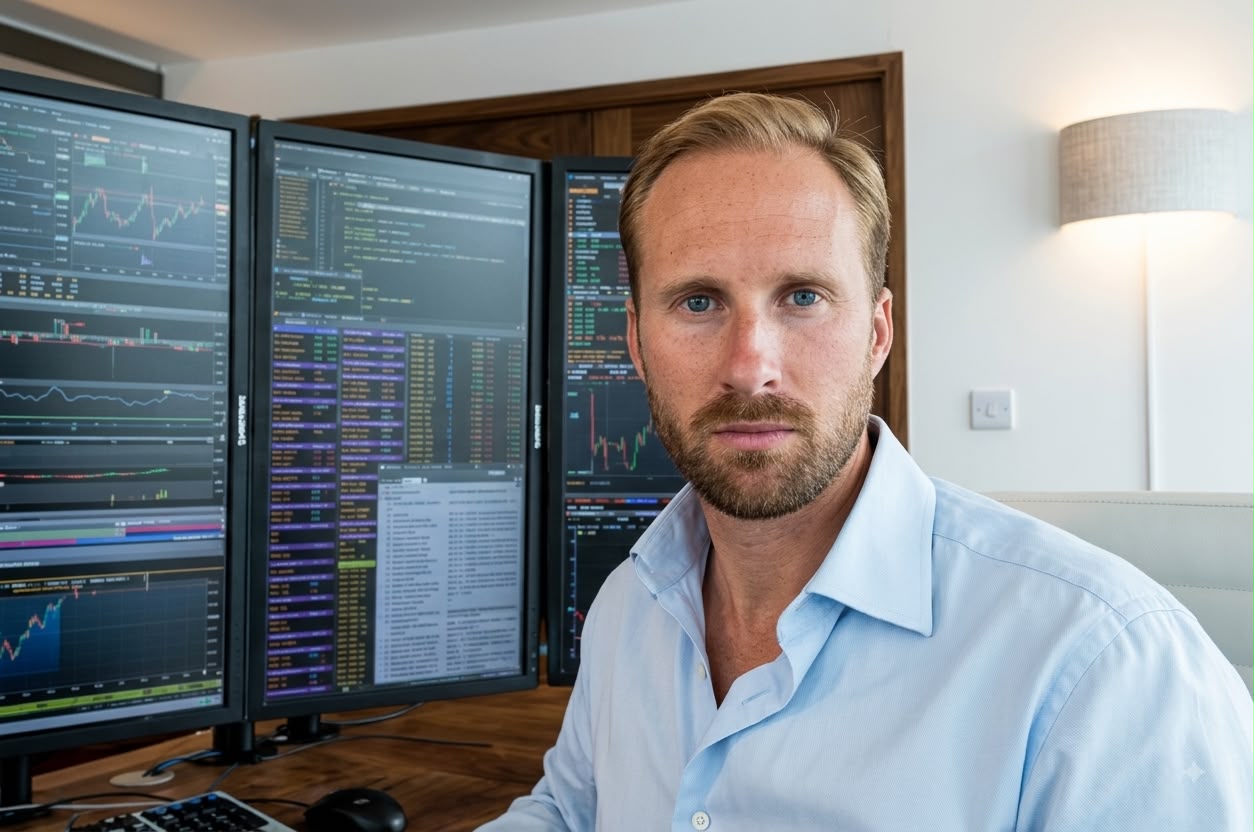
Alex spent nearly a decade building risk infrastructure at JPMorgan and HSBC, writing the systems that tracked billions in credit exposure. He learned firsthand how major institutions actually survive drawdowns.
When he stepped away to manage his own capital, he looked for a systematic strategy to run. Instead, he found an industry built for marketing rather than compounding. Strategies looked great in backtests, only to break the moment market dynamics shifted. Due diligence meant checking boxes, not testing the math under real stress.
So he stopped searching and started building.
He spent five years in R&D before taking on a single client account. Not to launch a firm, but to solve a problem no one else was willing to address honestly.
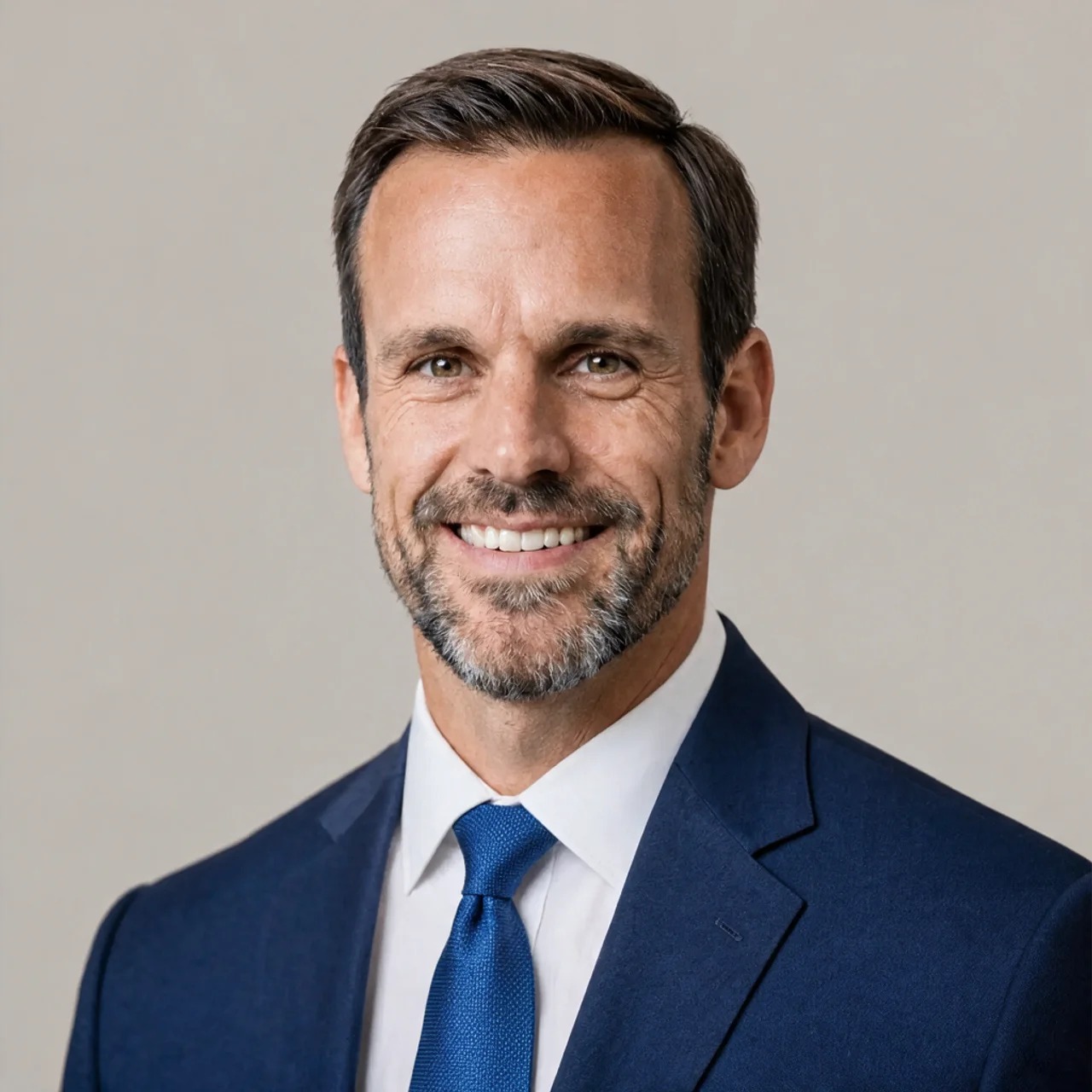
Monitors live exposure and equity floors on every account the model trades.
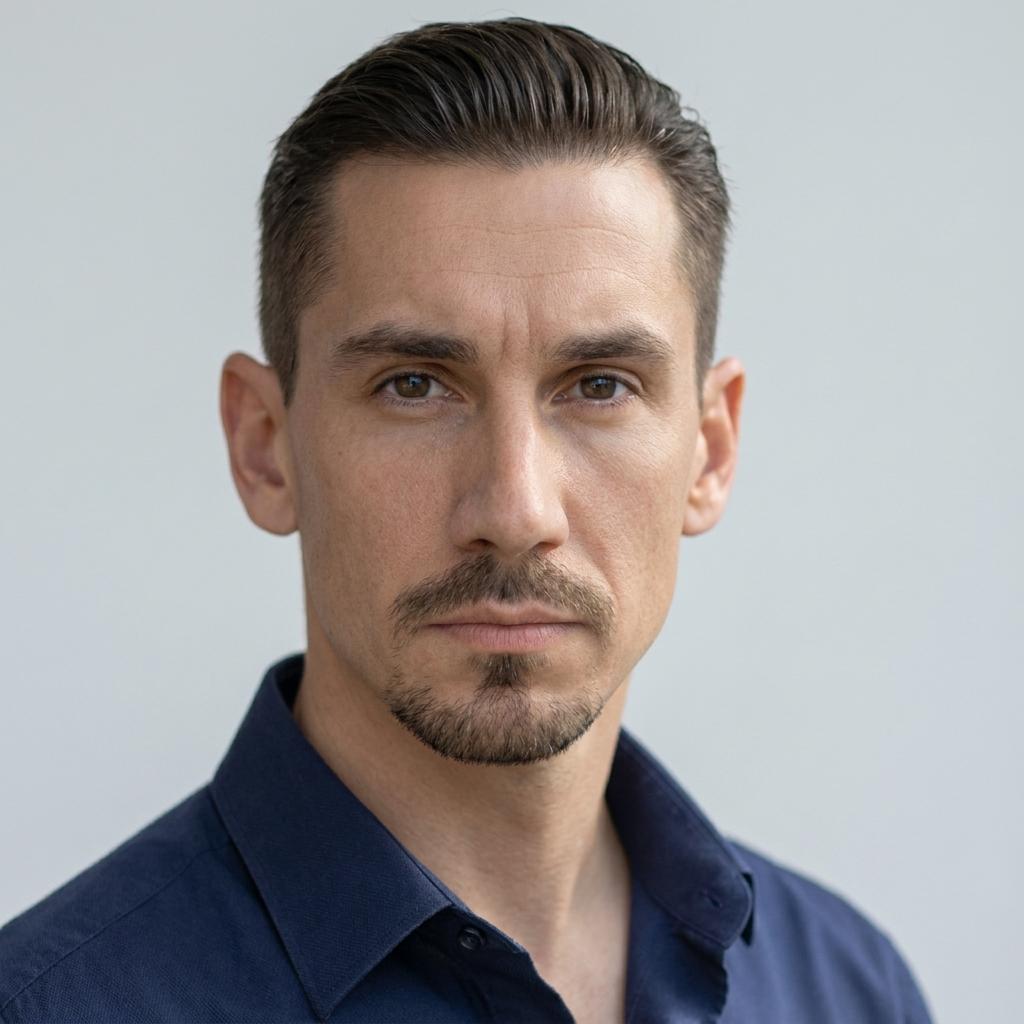
Reads the macro calendar and flags the sessions where the model sizes down.

Tests every rule change out-of-sample before it reaches a live account.
No. Kronos licenses trading signals, we don't manage your money or advise on your portfolio. That's a deliberate structural choice, not a loophole. It's why we're not registered as an RIA or CTA, and why the license is a flat fee rather than a cut of profits.
Revoke API access to your broker in one click, anytime. Your capital was always in your own Alpaca account. There's nothing to withdraw from us because we never held it.
Charging a performance fee would legally classify us as an Investment Adviser or Commodity Trading Advisor, with registration requirements and restrictions on who we can work with. A flat license fee keeps the structure simple and keeps us out of a role we were never trying to play.
Look at the Stress Events section above. That's the honest answer, not a reassurance. 4.2% max drawdown against the S&P's 33.9% during the 2022 shock. Drawdown control is the actual design goal, not a side effect of good returns.
The connection is execution-only. Kronos can place trades, it can never withdraw or move funds out of your account. Revocable at any time from your broker's side, not just ours.
Because a tax break on a lower-yielding strategy is still a losing bet.
The futures tax advantage is the oldest marketing trick in the book. The actual math on $1,000 of profit, at a typical 24% bracket:
To save that $54, a futures trader on NinjaTrader has to:
The Alpaca stock alternative. Our software trades commission-free on Alpaca, runs natively in the cloud with zero VPS requirements, and scans thousands of individual stocks for genuine, uncrowded inefficiencies.
The bottom line: if our stock system yields just 5.5% more gross profit than a crowded futures system, the entire tax advantage is neutralized. Don't optimize for a 5% tax loop. Optimize for raw alpha and modern execution.
Watch our latest analysis on macroeconomic trends, big tech AI investments, and how we manage a $20,000,000 portfolio.